Conference Room, Rosewood Hotel. Three men sat at a table designed to discourage discourse.
“What number are we talking about?” Benjamin asked.
Richard slid a folder across the table. “Four point six.”
“That’s aggressive.”
“It’s realistic—with the right team.”
Richard looked at Evan. “You’re the Face.”
Evan pulled out his iPhone. “Who’s The Architect?”
“David. He moved four in ‘08.”
“And The Grifter?”
“Janet.”
THE ARCHITECT
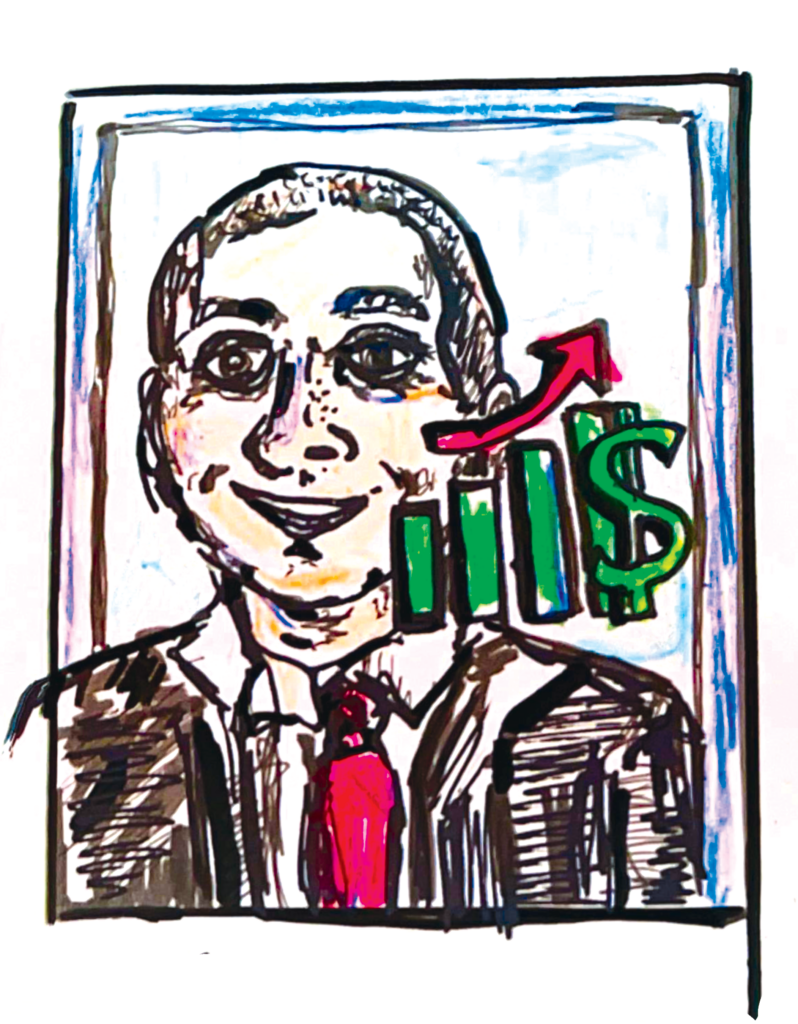
David’s office smelled like sandalwood and leather. He sat at his desk, fingers steepled, looking at Benjamin and Evan. Calm. “The mechanism is simple. Quantitative easing expands the monetary base by $4.6T. The Central Reserve purchases mortgage-backed securities and treasuries at $120B per month.”
“In English, David.” Evan said.
David smiled. “Money gets printed. We get dibs.” He pulled up a slide. A flowchart showing the path from Central Reserve to primary dealers to asset purchases. “The money doesn’t flow to consumers. Primary dealers purchase equities and real estate before prices adjust. By the time the market reacts, a dozen eggs costs $5. But we already own the coop.”
David never said “I” when he spoke. Always we or passive constructions. He was the invisible hand of the market. A young analyst named Claire—twenty-six, Hopkins MBA, $140k in student debt—raised her hand from a chair near the door. “What happens to people with fixed incomes?” she asked. Silence. David didn’t acknowledge her but still replied. “Collateral.” She stopped raising her hand after that.
THE GRIFTER
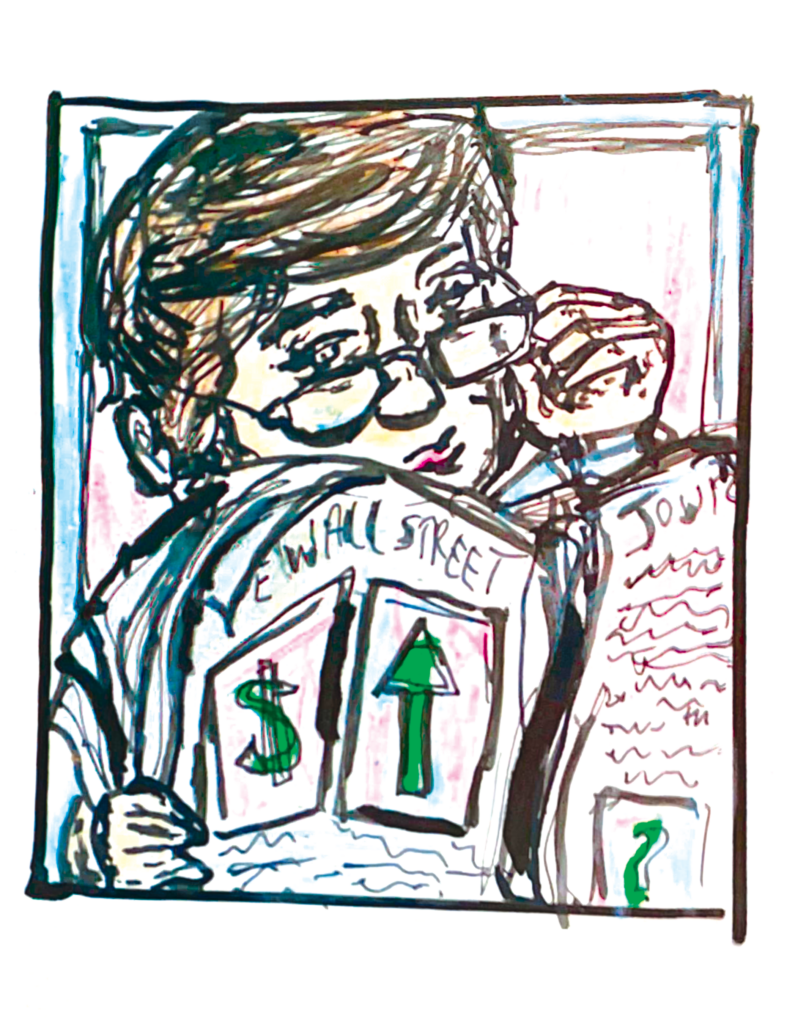
Janet woke at 5 AM, like she had for forty years. Black coffee, no sugar. Treadmill, 2.8 miles. NPR. Shower, cold for the last thirty seconds. By 6:30 she was reviewing the op-ed. She’d written versions of this before. In ‘08. In ‘01. In ‘87. The words changed. The song remained the same. Crisis. Intervention. Austerity. Her daughter – sophomore at Yale – had asked once “Mom, do you ever feel bad about what you do?” Janet had been drinking herbal tea. Chamomile. She set the cup down carefully. “What do you think I do?” – “You help people take from the poor to give to the rich.” Janet took off her reading glasses. Folded them. Set them beside the cup. “I help the market function. Without intervention, everyone suffers. The rich suffer slightly less, but that’s not the point. The point is stability.” Janet had picked up her glasses. Put them back on. Returned to her laptop. “Besides, how do you think you got into Yale with a 3.8 GPA?” Her daughter didn’t ask again.
The op-ed appeared Tuesday morning in The Wall Street Journal. “Why Aggressive Monetary Expansion Is Our Only Path Forward” 1,200 words. “Working families” (+37 favorability) appeared eight times. “Asset purchases” (-12 favorability) appeared once. Curation is an art. By Wednesday, every outlet was running it. The dissenting voices tried to respond. They didn’t have primetime slots.
THE INSIDE MAN

Lawrence’s job was simple: write the paper that would justify everything. 247 pages. Published by the Hamilton Institute. Anonymous donor. Definitely not Benjamin. Page 87, subsection 4.3.2: “Asset Purchase Programs and Wealth Effects.” The language was technical. Incomprehensible. That was the point. Lawrence knew the numbers. A PhD in Economy from U Chicago – advisor: Milton Friedman -, and thirty years of experience in the field – twice as Treasury Secretary, three times in private equity, once as director of the National Economic Council- made everything trivial. It’s all about distribution. Top 1% own 54% of stocks. Top 10%, 93%. Bottom 50%, less than 1%. But the paper didn’t mention that.
“Does anyone actually read these?” Benjamin asked over lunch at Le Bernardin.
Lawrence cut his yellowtail. “Three people will read it. None will understand it. But seventy-three people will cite it. That’s legitimacy.”
“What if someone challenges it?”
“Nobody will. And if they do, we publish a response. A 247 pages response. Eventually everyone gets tired and moves on.”
THE INFRASTRUCTURE

AMANDA: Bridgewater Consulting. Perception management. Pro incremental reform. Student loan relief – $10,000 phased over ten years. Meanwhile, asset purchases: $4.6T, immediate, no conditions.
MICHAEL: Sentinel Universal. Access control. Analysts ask questions? Performance reviews. Journalists pursue stories? Credentials under review. Prior approval required for sensitive areas.
JOSH: Capitol Solutions. Legislative strategy. The bill is 2,400 pages. Asset purchases are page 1,847, subsection 4.c. $1,200 checks. Page 3. Framed as COVID relief. That’s what CNN covers. All they need.
AMANDA: Timeline?
JOSH: Bill has 61 co-sponsors Friday. Law by Monday.
MICHAEL: And if people notice?
AMANDA: More stimulus on the way. $600 checks. If that doesn’t work, we redirect. Immigrants. Welfare recipients. China. Deflect the blame.
The three stand. They exit. They were never there.
THE FACE

Evan sat in the podcast studio. The host—let’s call him Joe—leaned forward like a labrador. “But isn’t the Central Reserve intervention the biggest government program in history?” Evan didn’t blink. “That’s different. That’s liquidity. That’s keeping the pipes flowing. I’m talking about regulations that prevent innovation.”—”What’s the difference?” — “One helps builders. One hurts them.”
Joe nodded. You could see him wanting to understand. Wanting to believe that Evan—successful, rich, certain—had figured something out that he hadn’t. Joe had a follow-up ready. You could see it forming. Something about distribution. Something about who owns the pipes. But he had texted the talking points beforehand—distribution was off the table. He flipped to trans women in sports. The show was three hours long. Sponsors paid well. Evan checked his phone between segments. His net worth had increased $26B since March. He typed a text to Richard: “Does it feel real to you?” Richard replied: “To no one.”
THE SCORE
The algorithm executed. $120B in treasuries and mortgage-backed securities purchased. $120B created from nothing. By 9:30 AM: S&P 500 up 2.3%. By 4:00 PM: $127B in wealth created. Top 1% captured: $119B. The news coverage focused entirely on the $1,200 stimulus checks. “Americans Getting Relief.” Asset purchases got one line. Page A17. Below the fold. Nothing was hidden—it was just boring.
EIGHTEEN MONTHS LATER
Total wealth transferred: $4.6T. U.S. billionaires gained 1.8. A 62% increase. Benjamin bought a $500 million yacht. Evan bought a social media platform for $44B. Richard went on CNBC and said, “The system is rigged.” People loved his honesty. Janet wrote another op-ed about inflation. Amanda redirected blame to supply chains. David sat in his office and started planning the next job.
EPILOGUE
Five years later, a journalist at ProPublica connected the dots. 8,000 words. Footnotes. Graphs. 47,000 views. Then Sentinel Capital bought the data—to optimize the next cycle. The journalist got a book deal. $240,000 advance. Netflix optioned it. They called it The Big Score. David watched the trailer. The actor playing him was too handsome. They’d given him a backstory. A dead wife. A sick daughter. A dog.
David texted Richard: “They made us sympathetic.”
Richard replied: “Good. Makes it easier next time.”
Claire. Five years older. She sits at David’s old desk. Same office. Same view. Same leather smell. No sandalwood. “What happened during COVID was terrible. But there’s something you need to understand. Progress is incremental. Reform takes time. Phase three launches Q2 2028. Universal basic income pilot. $500 monthly. $8T in digital currency infrastructure.” She smiles. “They’ll thank us for that.”
Mario Senzale is a South American writer and mathematician currently living in Indianapolis, Indiana. His stories can be found in Expat Press, Cryptic Frog, Last Girls’ Club, Weird Daze and Horrific Scribes, as well as in his website, mariosenzale.neocities.org